

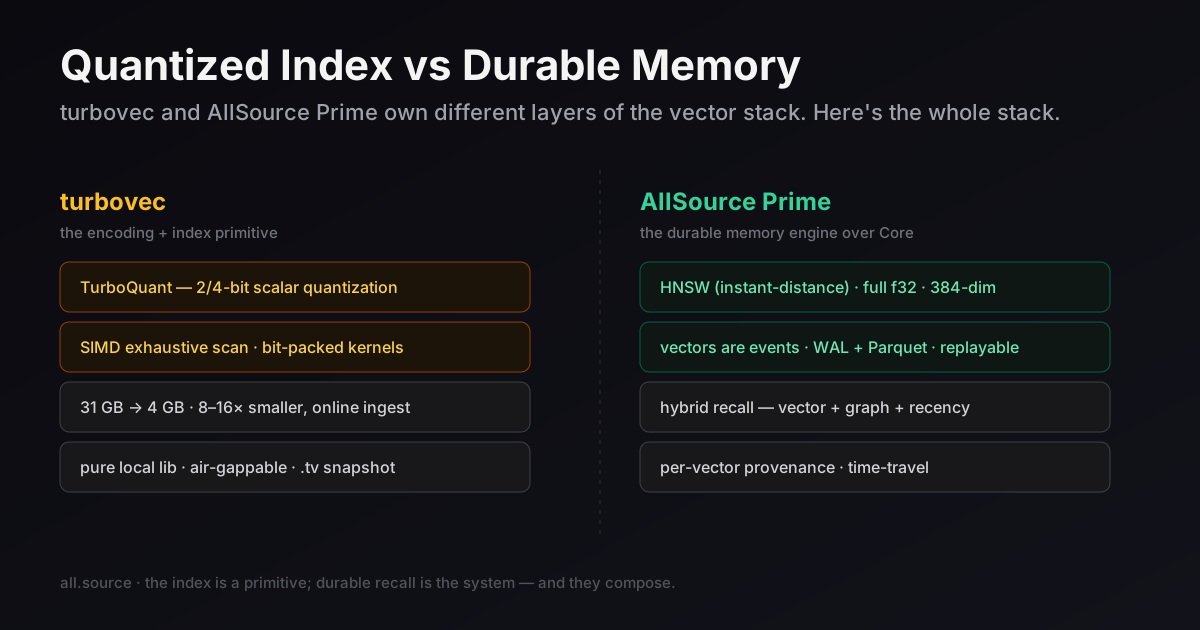
Every comparison of two vector tools starts as a fight and ends as a shrug, because the tools usually solve different problems. turbovec and AllSource Prime are a clean example. One is a quantized index primitive. The other is a durable memory engine. Put side by side they look like competitors; stacked, they're complements.
This post draws the full stack, shows where each tool wins, and lays out the use cases — including the ones where you'd run them together.
The four layers of a vector system
A complete vector system has four layers. Most tools own one or two and lean on you (or another service) for the rest.
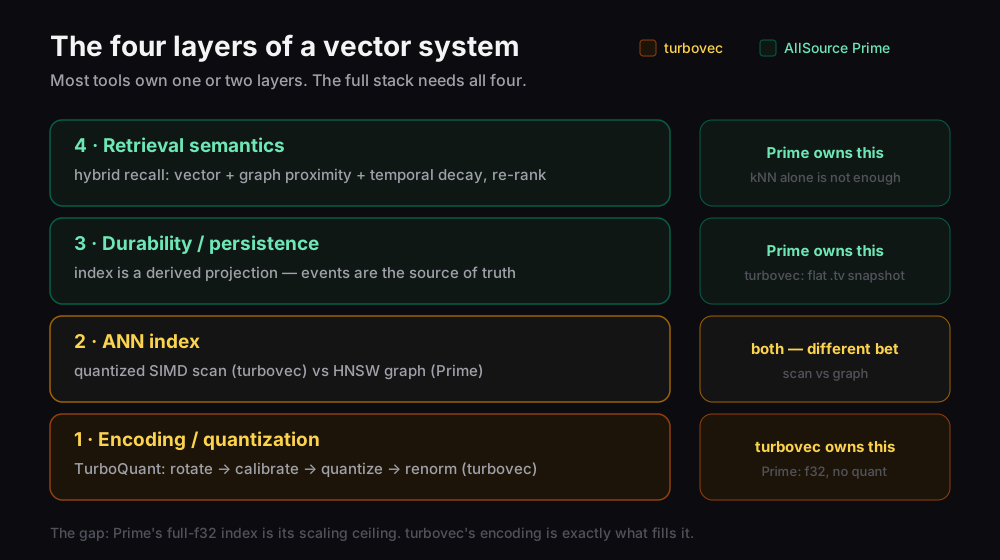
- Encoding / quantization — how a float vector becomes bytes.
- ANN index — how you find nearest neighbours fast.
- Durability — what survives a crash, and where truth lives.
- Retrieval semantics — how raw kNN becomes a useful answer.
turbovec owns layers 1–2. Prime owns layers 3–4 (and brings its own take on 2). The honest read: neither is "better" — they're betting on different layers.
Layer 1 — encoding: turbovec's home
turbovec is built on Google Research's TurboQuant. The whole idea: separate a vector's magnitude from its direction, rotate it so coordinates follow a known distribution, then quantize the direction cheaply.
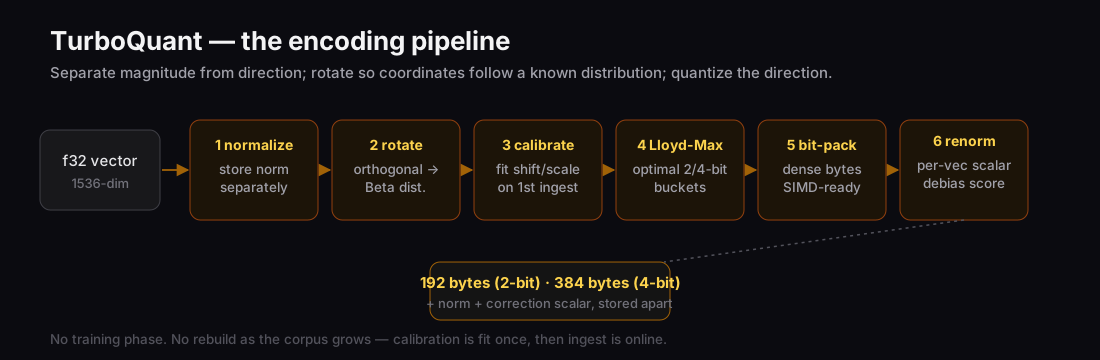
The payoff is memory. A 10M-document corpus at 1536 dimensions is 31 GB as float32. At 4-bit it's 4 GB. At 2-bit it's 2 GB.
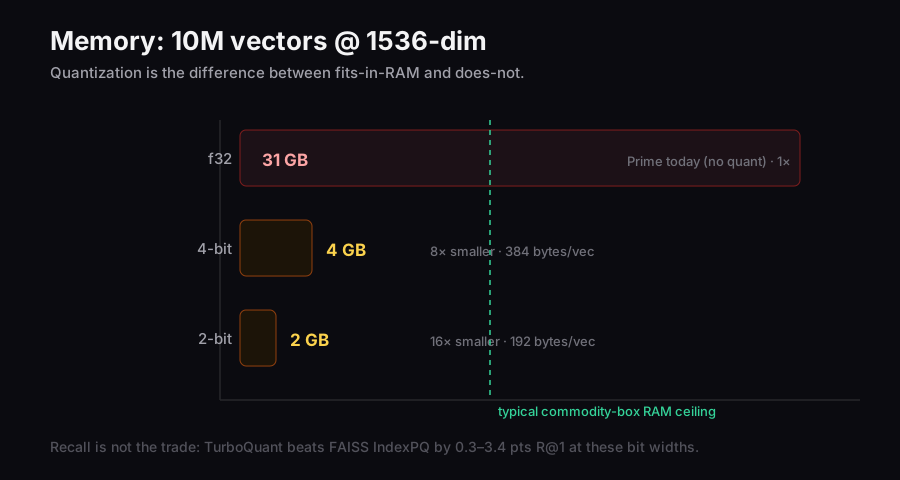
The usual fear with quantization is that smaller means worse results. With TurboQuant it doesn't — it edges out FAISS IndexPQ on recall at every bit width tested.
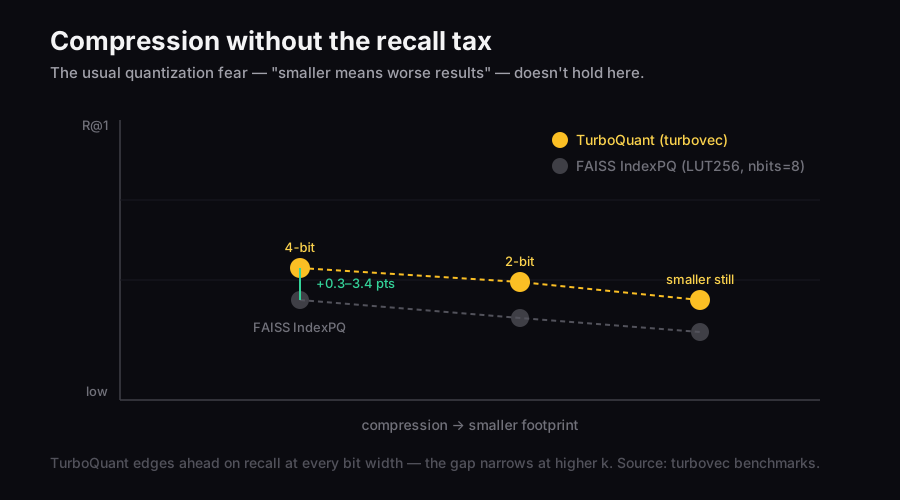
AllSource Prime, by contrast, stores full float32 (QuantizationMode::None, 384-dim MiniLM ≈ 1.5 KB/vector). Highest fidelity, but it's also Prime's scaling ceiling — which is exactly the gap turbovec's encoding fills.
Layer 2 — index: scan vs graph
This is the one layer where both tools have an opinion, and they disagree.
- turbovec: a quantized, bit-packed SIMD exhaustive scan. Tiny RAM, online ingest, no rebuild — but cost grows with N.
- Prime: an HNSW graph (
instant-distance). Flat low latency at huge N — but high RAM and a rebuild on change.
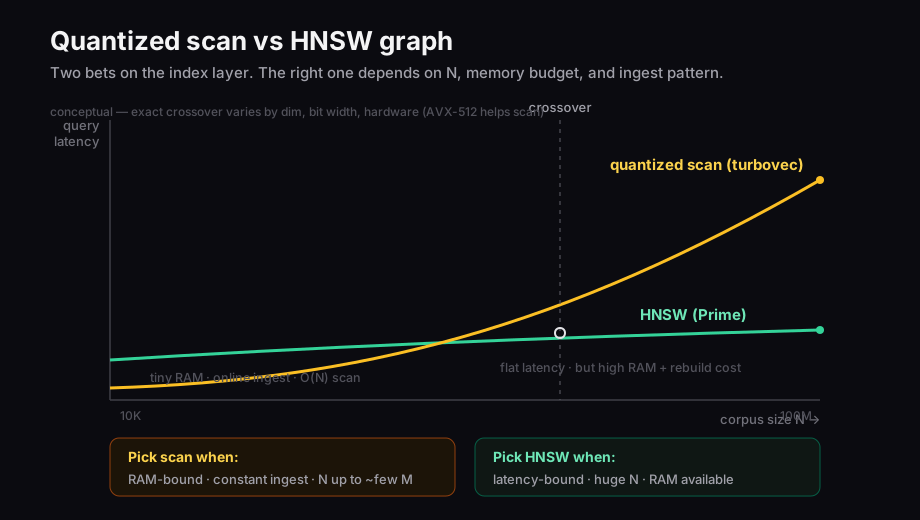
There's a crossover. Below it, the quantized scan's tiny footprint and zero-rebuild ingest win. Above it, HNSW's flat latency wins — if you can pay the RAM. AVX-512 pushes the crossover rightward (scan gets faster); a constant-ingest workload pushes it leftward (HNSW's rebuilds hurt).
Layer 3 — durability: Prime's home
Here the tools diverge hardest. In Prime, the index is a derived projection — vectors are Core events (prime.vector.stored), and the HNSW index rebuilds from the log. In turbovec, the index is the artifact; you persist it to a flat .tv snapshot and reload it.
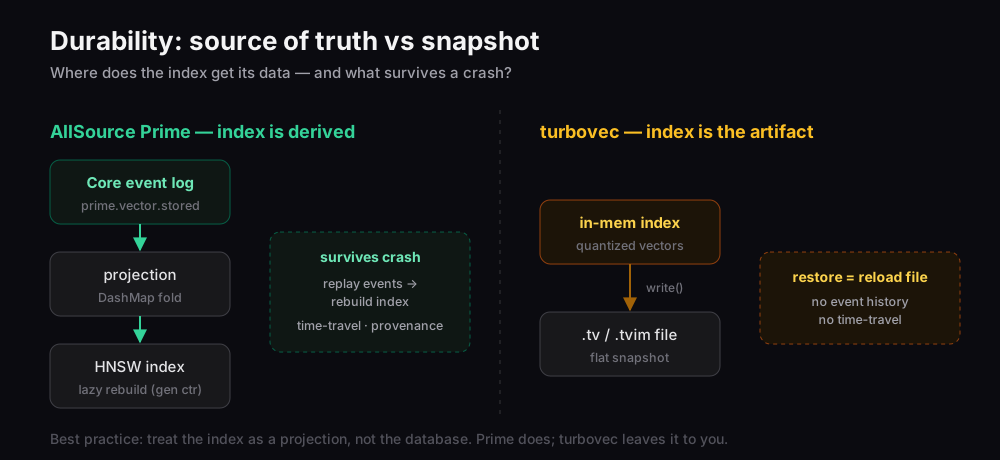
Best practice, and Prime's whole bet: treat the index as a projection, not the database. Replay rebuilds it; you get time-travel and per-vector provenance for free. turbovec leaves durability to you — correct for a library, a gap for a memory system.
Layer 4 — retrieval: kNN is one signal
Raw nearest-neighbour search is rarely the answer you want. Prime's recall over-fetches kNN candidates, then re-ranks with graph proximity (BFS from the seeds) and temporal recency (exponential decay). turbovec contributes the other half of good hybrid retrieval: an allowlist filter that runs inside the SIMD kernel, so you filter by SQL / BM25 / ACL results without over-fetching the whole corpus.
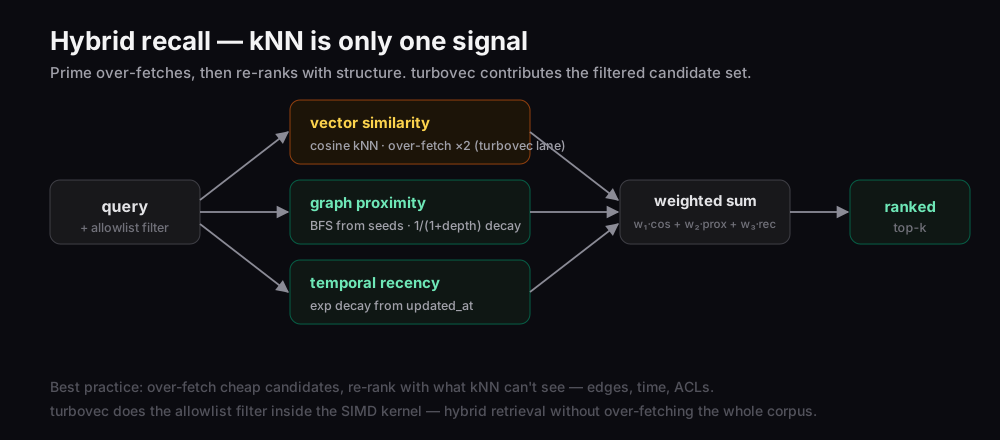
Best practice: over-fetch cheap candidates, then re-rank with what kNN can't see — edges, time, access control.
Use cases — which one, and when
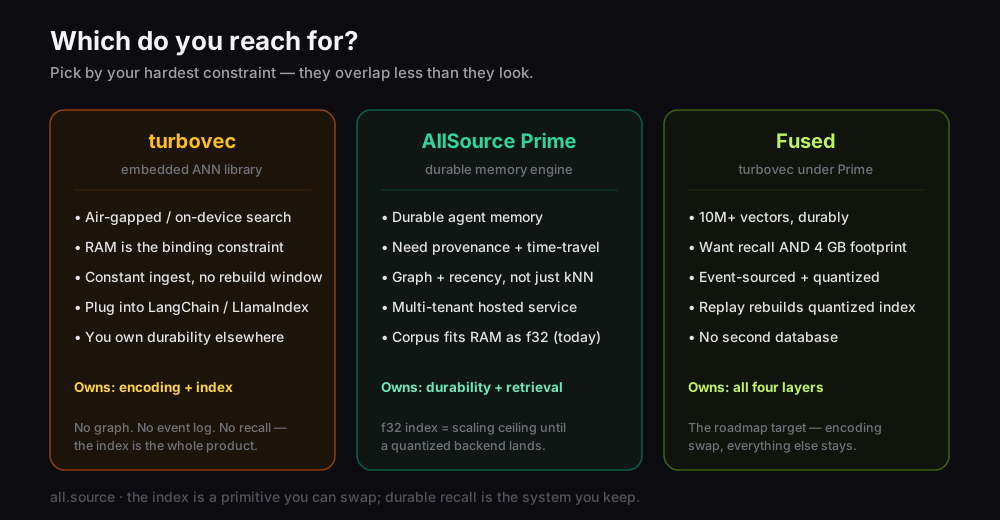
Reach for turbovec when:
- On-device or air-gapped RAG. A desktop copilot or an offline appliance where there's no service to call and RAM is tight. 4 GB for 10M docs is the difference between shipping and not.
- RAM is the binding constraint. You're index-bound, not latency-bound, and quantization buys you 8–16× headroom.
- Constant ingest with no rebuild window. Online ingest means new vectors are searchable immediately, no retraining.
- Drop-in for an existing pipeline. LangChain / LlamaIndex / Haystack / Agno integrations,
pip install turbovec[framework], done.
Reach for AllSource Prime when:
- Durable agent memory. Agents that must remember across restarts, with provenance — every fact traces to an event you can replay.
- The answer needs structure, not just similarity. Graph relationships and recency matter — "what's related to this and recent" beats "what's nearest."
- Multi-tenant, hosted, time-travelling. Per-tenant isolation, audit, and "what did memory look like last Tuesday" are requirements, not nice-to-haves.
Use case — both together
The interesting case is the overlap. Prime's full-f32 index caps how far it scales in RAM. turbovec's encoding is precisely what lifts that cap. So: keep Core as the source of truth, keep the graph + recall semantics, and swap the f32 HNSW for a quantized backend underneath.
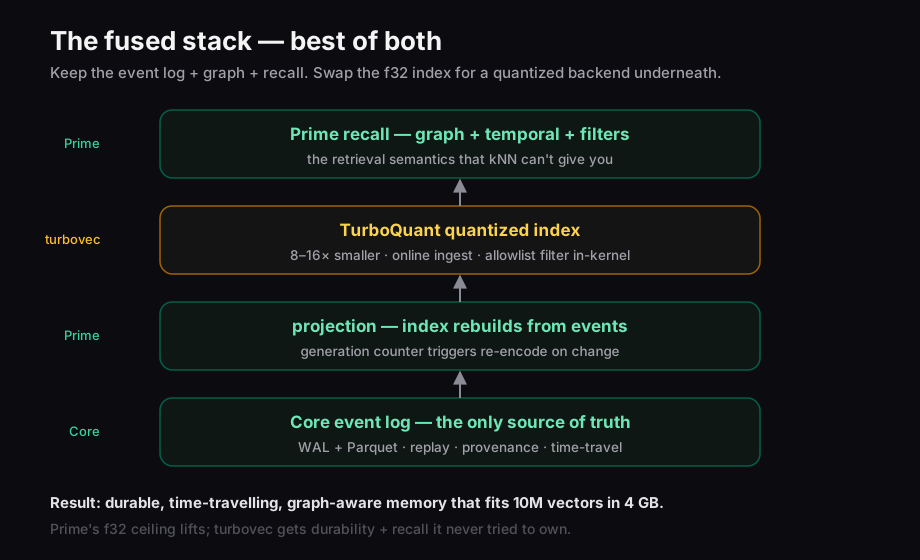
Concretely, the only layer that changes is the index. Vectors still arrive as events; the projection still rebuilds on a generation-counter bump — except now it re-encodes into a quantized index instead of an f32 graph. You get durable, graph-aware, time-travelling memory that fits 10M vectors in 4 GB.
Run them together when you want both durable recall and a 4 GB footprint — an enterprise knowledge base, a large-scale agent fleet sharing memory, anything event-sourced that also has to fit on commodity hardware. turbovec gains durability and recall it never set out to own; Prime gains the scale ceiling it was missing.
The one-line version
The index is a primitive you can swap. Durable, graph-aware recall is the system you keep. turbovec is one of the best primitives going — and the cleanest way to think about AllSource Prime is as the durability and retrieval layers that a primitive like it slots straight into.
Diagrams are conceptual where noted; compression and recall figures are from the turbovec benchmarks. Prime internals reference apps/core/src/prime/vectors and ADR-015 (vector index generation counter).